In 2015, Jörn Threlfall directed a crime/mystery short film called 'Over'. It ultimately tells the true and tragic story of a man from Angola who fell to his death from a British Airways flight as it arrived in London. The man had been hiding in the plane's 'wheel-well' and fell out when the landing gear was lowered, by which point his body was almost frozen. Threlfall uses an unconventional narrative to tell this story; as the events, labelled with various times, unfold backwards, allowing the viewer upon their first viewing, to play detective and work out the mystery themselves.
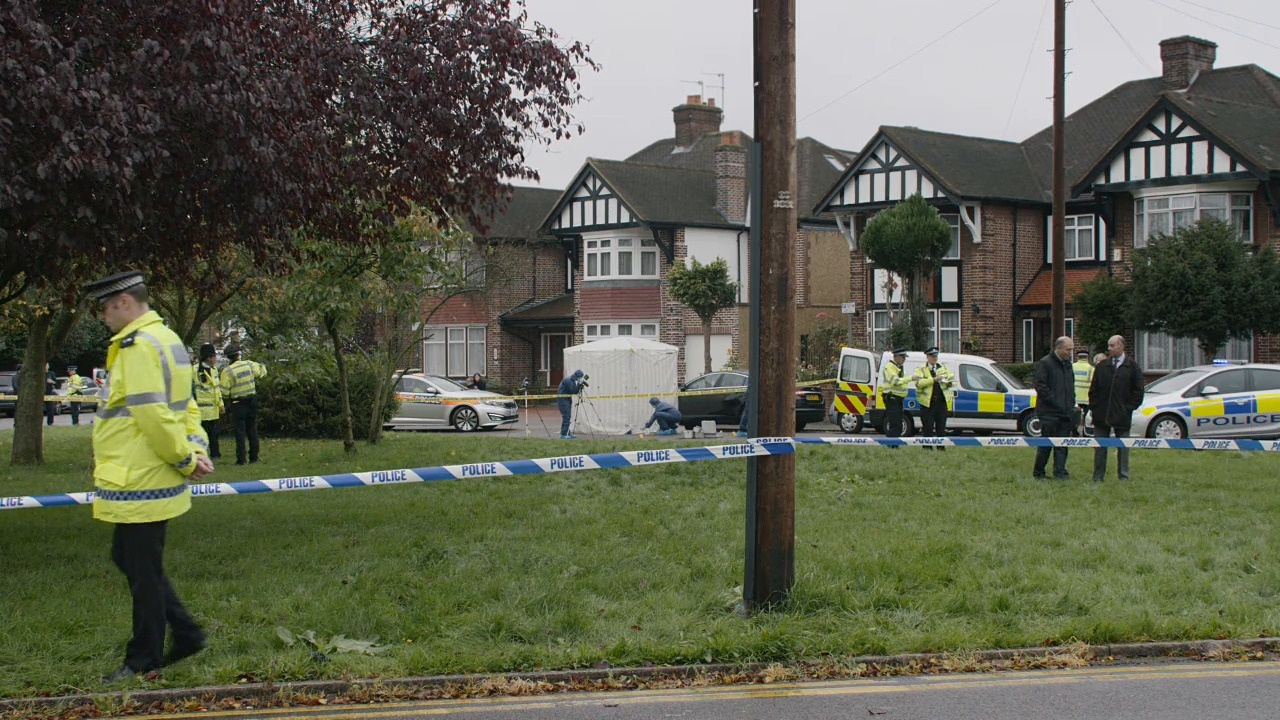
When I began to watch this film, I thought the use of very long takes of minimal action were boring, but upon reflection, I realise that once you understand the storyline, the fact that not much is happening is the point; this is the aftermath of the man's death, yet there seems to barely be any effect on the community. I think this narrative is very effective, and a new and interesting way to tell a tragic story caused by the immigration crisis. It says a lot about Britain's stance on this topic, especially within a middle-class neighbourhood where the film is set, as people tend to become desensitised to death that they can't relate to, but by telling the story backwards, Threlfall ensures the film ends in shock, and leaves the audience thinking for a while afterwards.
Micro-elements in this film are also very effective; Threlfall ensures complete realism by using only diegetic sound, and with static and distant shots, giving the viewer the POV of an observer. Integrated within these shots are sudden close-ups of the action, and still images of evidence, which upon a second viewing seem particularly shocking, especially the close-up of the hose, washing away the man's blood.
Strangely, a short film I recommended on this blog in June, before I knew the short films would be studying (Home), is also a British short film of around 25 mins, about the refugee crisis, and the narrative once again told backwards. The film, by Daniel Mulloy, delivers the same message as 'Over', but despite this, the films are still completely different in terms of the events occurring, the characters and the micro-elements.
In terms of 'Home' influencing my own work, I am a fan of the unconventional narrative, as this really makes the viewer think, but though it is perfect for this particular narrative, I think this would be hard to pull off with a different story, and I'd have to think carefully about what I would want my film to be about.
When I began to watch this film, I thought the use of very long takes of minimal action were boring, but upon reflection, I realise that once you understand the storyline, the fact that not much is happening is the point; this is the aftermath of the man's death, yet there seems to barely be any effect on the community. I think this narrative is very effective, and a new and interesting way to tell a tragic story caused by the immigration crisis. It says a lot about Britain's stance on this topic, especially within a middle-class neighbourhood where the film is set, as people tend to become desensitised to death that they can't relate to, but by telling the story backwards, Threlfall ensures the film ends in shock, and leaves the audience thinking for a while afterwards.
Micro-elements in this film are also very effective; Threlfall ensures complete realism by using only diegetic sound, and with static and distant shots, giving the viewer the POV of an observer. Integrated within these shots are sudden close-ups of the action, and still images of evidence, which upon a second viewing seem particularly shocking, especially the close-up of the hose, washing away the man's blood.
Strangely, a short film I recommended on this blog in June, before I knew the short films would be studying (Home), is also a British short film of around 25 mins, about the refugee crisis, and the narrative once again told backwards. The film, by Daniel Mulloy, delivers the same message as 'Over', but despite this, the films are still completely different in terms of the events occurring, the characters and the micro-elements.
In terms of 'Home' influencing my own work, I am a fan of the unconventional narrative, as this really makes the viewer think, but though it is perfect for this particular narrative, I think this would be hard to pull off with a different story, and I'd have to think carefully about what I would want my film to be about.
Comments
Post a Comment